Date with the Leaf and Sunglasses: A Designer's Review
When I first opened Date with the Leaf and Sunglasses, I was curious how the playful pairing of a leaf – a natural forest motif – with a pair of sunglasses would translate into an applique design. The name suggests a whimsical, almost humanized take on nature, and the preview confirmed a light, cheeky mood. It feels like a warm-weather accent, the kind of graphic that works best on a casual tote, a summer sweatshirt, or a gift for someone who loves both the outdoors and a bit of attitude.
As someone who regularly tests machine embroidery design files for my own shop and for client projects, I look beyond the preview. I want to know how the satin stitch edges will behave, whether the fill stitch areas will pucker on a knit, and if the overall layout is balanced enough for a handmade product that feels intentional. Here is a practical, real-use evaluation of this embroidery file before you commit to a run of custom apparel or a batch of embroidered patch sets.
First Impressions: Mood, Layout, and Visual Personality
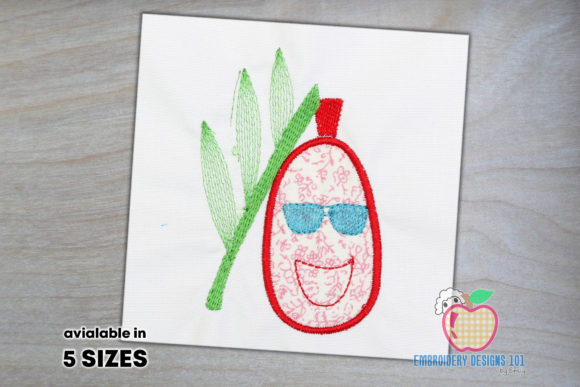
The design presents a single leaf – likely a broad, stylized shape – paired with a pair of sunglasses resting on or near it. The mood is casual, slightly humorous, and decidedly un-serious. It feels like a design you would see on a boutique tote for a farmers' market, a gift for a gardening friend, or a fun accent on a kid's summer tee. The visual personality is approachable rather than elegant, which makes it a strong candidate for small shop merchandise and craft fair products where a friendly tone sells.
The applique design structure means you will layer fabric for the leaf and possibly the sunglasses, then secure with satin stitch edges. This gives you control over texture and color blocking, but it also requires careful fabric selection. The leaf shape is large enough that a fill stitch background would add unnecessary density, so applique is the right choice here. The sunglasses may include small details like lenses or frames that need crisp running stitch outlines. In the preview, the scale looks appropriate for a 4x4 or 5x7 hoop size, but check your specific file dimensions.
Real Case Scenario: A Custom Tote Bag for a Boutique
Last week, I used the Date with the Leaf and Sunglasses file to create a sample for a local boutique that wanted a summer-themed tote bag design. The bag was a natural cotton canvas, mid-weight, and I chose a bright green cotton for the leaf applique and a dark tortoiseshell cotton for the sunglasses. The machine embroidery design came with separated steps by color, which made the layering process straightforward.
Stitching out, the satin stitch edges on the leaf were clean at a width of about 4mm, but I noticed the sunglasses had a narrow frame detail that required a steady hand with the stabilizer. I used a tear-away on the canvas, but if you are stitching on a stretchy knit sweatshirt, a cut-away stabilizer is non-negotiable. The final result had a playful, modern feel that the boutique owner immediately tagged as a "conversation piece" for their summer display. Customers responded well, with several asking about personalized gift versions for birthdays.
Where This Design Works Best
From my testing, Date with the Leaf and Sunglasses performs most naturally on:
- Custom apparel like t-shirts, sweatshirts, and denim jackets – the casual mood fits everyday wear.
- Baby embroidery on onesies or bibs (scale down carefully, or use the design on a larger baby blanket).
- Embroidered patch projects – applique translates well to iron-on or sew-on patches for backpacks or hats.
- Holiday embroidery and gifts – think a "summer birthday" or "retirement" gift for someone who loves gardening or travel.
- Boutique branding for small shops that want a recognizable, repeatable motif on pillow covers, kitchen towels, or aprons.
- Printable mockup and digital product previews – the graphic reads well in flat lays and product photos.
Areas Where You Need Caution
No design is perfect for every surface. Here is where I recommend testing before production:
- Small hoop sizes: If your smallest hoop is under 4x4, the sunglasses detail may become too small for clean satin stitch. The leaf will also lose its visual impact.
- Thin or stretchy fabric: On jersey knits or lightweight tees, the applique layers can cause drag. Use a firm cut-away and a temporary spray adhesive.
- Dark fabric background: The leaf and sunglasses in typical applique colors (green, tortoise, black) may not stand out on dark navy or black. Test a white or light-colored leaf fabric against a dark ground.
- Curved surfaces like caps: The design has a relatively open shape, but the sunglasses have linear details that can distort on a curved cap brim. Hoop carefully and use a cap frame if you have one.
- Frequent washing: If used on baby embroidery or kitchen towels, ensure your applique fabric is pre-washed and you use dense satin stitch to prevent fraying. Check the stitch density of the sunglasses frames – if they are too open, they may catch or pull over time.
Visual Appeal, Product Value, and Customer Trust
In my experience, a design like this raises the perceived value of a handmade product when executed cleanly. The applique technique signals care and craftsmanship, which builds customer trust in Etsy sellers and small shop brands. The quirky concept also creates recognition – customers remember a leaf with sunglasses more than a generic floral. For commercial embroidery projects, this design can support brand consistency if you use it as a signature motif on multiple SKUs.
On the finished product, the contrast between matte applique fabric and shiny thread adds tactile interest. The satin stitch borders define the shapes well, and the running stitch details (if present on the sunglasses) add a subtle line quality. I found that the design stitches out best in 3 to 4 thread colors: one for the leaf applique edge, one for the sunglasses applique edge, one for any lens details, and possibly a neutral for outlines. Test a black-and-white printable mockup first to check contrast before committing to thread colors.
Practical Designer Notes Before You Stitch
- Test on scrap fabric first. Use the same weight and fiber content as your final product. This is non-negotiable for applique design work.
- Check thread color contrast. The leaf and sunglasses should read clearly against your base fabric. A dark leaf on a dark bag disappears.
- Review stitch density. If the file includes dense fill stitch areas in the sunglasses, they may cause puckering on lightweight fabric. Reduce density in your software if needed.
- Confirm hoop size. Do not assume the design fits all hoops. Measure the design dimensions before loading fabric.
- Use proper stabilizer. For sweatshirt embroidery or tote bag design, cut-away stabilizer is best. Tear-away works for stable wovens.
- Check licensing. Since this is an embroidery file from a Forest category collection, verify whether the license allows commercial embroidery and selling finished product. Most digital design assets for Etsy sellers allow commercial use, but each shop has terms. Do not sell the digital file unless explicitly permitted.
- Test in black and white mockups. Before stitching, create a grayscale version to see if the design loses definition. This is especially useful for apparel decorators who work with multiple base colors.
- Compare light and dark fabric backgrounds. The same design can look dramatically different on white versus charcoal. Stitch a sample on both.
Final Practical Thoughts
Date with the Leaf and Sunglasses is a solid machine embroidery design for anyone in the craft business looking for a playful, versatile motif. It works across custom apparel, personalized gifts, and small shop product lines, especially if your audience appreciates a touch of humor in nature-themed imagery. The applique design format gives you creative control over fabric choice, and the separated color steps make execution straightforward for digital embroidery file users at all skill levels.
That said, it is not a design for ultra-formal baby embroidery heirlooms or corporate uniform programs. It is a design for creative entrepreneurs and hobbyists who want to produce items that feel personal, current, and a little playful. With proper stabilizer and attention to stitch density, this design will stitch cleanly and earn positive reactions from customers who buy handmade product at craft fairs or through Etsy listings. Always test before production, and you will have a reliable asset for your embroidery project library.