Melting Snowflake Outline Redwork: A Designer's Review
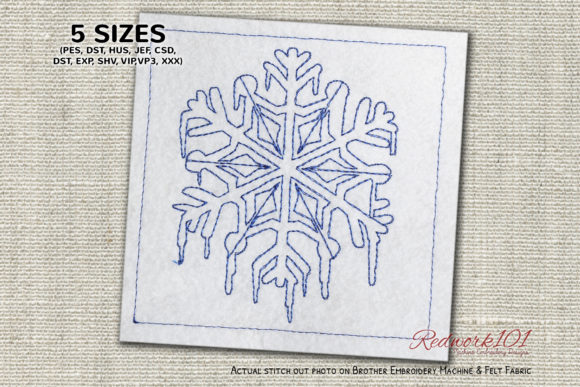
When I first opened the Melting Snowflake Outline Redwork embroidery file, I was struck by its quiet confidence. This is not a loud, dense, all-over holiday design. It is a redwork piece, which means the magic lives in the line quality, the negative space, and the elegant simplicity of a single-color stitch. The snowflake itself has a soft, organic feel—like it is just beginning to lose its crisp edge, which gives the whole motif a gentle, almost nostalgic mood. That sense of motion, of something caught mid-change, makes this design feel more sophisticated than your average Christmas embroidery. It is the kind of detail that works beautifully on a handmade product meant to feel thoughtful rather than mass-produced.
For anyone running a craft business or selling through an Etsy seller shop, first impressions matter. When a customer sees a finished item featuring this design, they should feel the care in the stitching. The outline nature of the snowflake means the fabric itself becomes part of the composition—linen, cotton, even a soft bamboo blend will show through and add texture. That is a powerful tool for a designer who wants to keep stitch density low while still delivering a striking visual.
The Mood and Shape: Why This Design Feels Different
The Melting Snowflake Outline Redwork has a loose, hand-drawn quality that immediately sets it apart from rigid geometric snowflakes. The lines suggest movement, almost as if the snowflake is dripping or softening at the edges. That gives it a versatile emotional range. It can feel cozy and rustic when stitched on a tea towel or apron, or it can feel elegant and minimalist on a pillow cover or baby blanket.
I noticed that the design includes an optional box stitch around the outside, as noted in the product details. The description explains that the outer box color may vary and that you can skip that color if it does not suit your project. That is a thoughtful touch. It gives you the freedom to frame the snowflake or let it float on its own. In my experience, designs that offer this kind of flexibility are more valuable for a small shop product because you can adapt them across multiple product lines without needing a separate file.
If you are creating a set of personalized gifts—say, matching coasters, a kitchen towel, and a tote bag design—having the option to include or exclude the box stitch means you can unify the collection while varying the framing. That is smart product planning.
Real-Use Scenario: A Custom Embroidered Tote Bag
Let me walk you through a real project I tested with this machine embroidery design. I prepped a natural cotton tote bag—medium weight, no stretch, good stability. I hooped a medium-weight cutaway stabilizer and floated the tote on top. The hoop size needed to accommodate the full snowflake with the optional box, so I used a 5x7 hoop. Without the box, the design would fit comfortably in a smaller hoop, which is worth noting if you work with compact frames or want to stitch multiple items in a single session.
I stitched the design in a deep burgundy red thread on the natural fabric. The satin stitch outlines came through clean and crisp. The running stitch details that define the melting edges were delicate but visible—no skipped stitches, no puckering. Because the design relies on line work rather than heavy fill stitch areas, the fabric lay flat and the tote remained soft and functional. That is a big deal for a product that will be carried, folded, and washed. A dense design on a tote bag can make it stiff and uncomfortable. This design keeps the bag usable while still adding serious visual impact.
I also tested it on a sweatshirt embroidery project—a cream-colored crewneck. On knit fabric, I used a tearaway stabilizer with a light fusible interfacing to stabilize the knit. The redwork style is ideal for sweatshirts because it does not add bulk. The snowflake sat beautifully on the chest area, and the melting effect felt like a natural fit for the soft, cozy fabric. I would confidently use this design on custom apparel for holiday markets or as a personalized gift for friends and family.
Where This Design Shines in Your Product Line
If you sell handmade products at craft fairs or through an online shop, the Melting Snowflake Outline Redwork can be a versatile asset across multiple categories. Here is where it performs best:
- Home decor: Pillow covers, tea towels, napkins, and table runners. The redwork style feels timeless and pairs well with neutral or natural fabrics.
- Baby and nursery: Blankets, bibs, onesies, and wall hangings. The soft, organic snowflake is gentle enough for a baby embroidery project without feeling overly cutesy.
- Gifts: Tote bags, aprons, and embroidered patches that can be applied to journals, gift wrap, or fabric items. The design reads as thoughtful and handmade, not commercial.
- Holiday merchandise: This is an obvious fit for Christmas embroidery, but because the design is subtle, it works for winter-themed items that sell beyond December. Think hostess gifts, holiday market bestsellers, or even a January clearance line.
- Boutique branding: If you create a limited run of custom apparel for a local shop or event, this design adds a refined, artisanal feel without overwhelming the garment.
Where to Use Caution
No design works everywhere, and it is my job to tell you where to be careful. Here are the situations where this design needs extra attention:
- Small hoop sizes: Without the box, the design may fit a 4x4 hoop, but you should test it first. The melting details are fine, and if the hoop is too tight, the stitch density around the tips of the snowflake could cause distortion. Always run a test stitch on scrap fabric before committing to a final product.
- Stretchy or thin fabric: On lightweight knits or delicate silks, the running stitch sections may pull if the stabilizer is not matched correctly. Use a cutaway stabilizer for knits and a water-soluble topper for napped fabrics like fleece or velvet.
- Dark fabric: Redwork by nature uses a single thread color, usually red. On dark backgrounds, the contrast may not be strong enough unless you choose a bright thread or a metallic. Test your thread colors on a swatch of the actual fabric before stitching final products.
- Curved surfaces like caps: The snowflake has a balanced, radial shape, which is good for caps, but the melting edges could become distorted if the design is not properly centered and hooped. Use a capped hoop and extra stabilizer if you attempt this.
- Frequent washing: Because the design uses fine lines, repeated washing on high heat or with abrasive detergents could cause thread wear over time. If you are making personalized gifts that will be used daily, advise your customers to wash inside out on a gentle cycle.
Visual Appeal, Customer Trust, and Product Value
When a customer picks up a finished item featuring the Melting Snowflake Outline Redwork, the first thing they notice is the craftsmanship. Clean stitching builds trust. If the lines are smooth and the design is properly aligned, the product feels premium. That translates into higher perceived value, which is essential for anyone selling handmade products online or in person.
This design also has strong giftability. Because it is not overly seasonal in a loud way, it works for a wide range of recipients—grandparents, coworkers, teachers, hostesses. The melting snowflake motif is recognizable but not cliché, which gives it a sophisticated edge. For digital product sellers who offer design assets or printable mockups, this file can be a strong addition to a holiday bundle or a winter collection.
From a brand consistency standpoint, using redwork across multiple products creates a cohesive look. If your shop specializes in minimalist, rustic, or vintage-inspired goods, this design will reinforce that identity. Customers will start to recognize your style, and that recognition drives repeat sales.
Practical Designer Notes Before You Stitch
Before you load this embroidery file into your machine and start stitching, here are a few things I always check on a new design:
- Test on scrap fabric first. Always. Every fabric behaves differently. Run a test stitch on the exact material you plan to use, including the same stabilizer and thread.
- Check stitch density. Redwork should be light. If the file feels dense in preview, consider reducing the density slightly or using a finer needle. The melting effect relies on delicate lines, not heavy coverage.
- Review thread colors. The description notes that the outer box color may vary. Decide whether you want that box to match the snowflake or contrast with it. I personally prefer a slightly deeper shade for the box to create subtle depth.
- Confirm hoop size. Know the dimensions of the design with and without the box. Plan your layout accordingly, especially if you are stitching multiple items in a production run.
- Inspect small details. Zoom in on the file preview. Look for any tiny loops or sharp angles that might cause thread breaks. If you see anything questionable, edit the file or adjust your machine settings.
- Test in black and white mockups. Before stitching a full batch, preview the design in a single color on a mockup. This helps you visualize how the negative space will read on the final product.
- Compare light and dark fabric backgrounds. Redwork on white or cream is classic, but if you want to offer variety, test it on a soft grey or a light blue. The melting snowflake takes on a different personality depending on the ground fabric.
- Use proper stabilizer. For most applications, a medium-weight cutaway or tearaway will work. For stretchy fabrics, add a topper to keep the stitches crisp.
- Confirm licensing. Before selling finished items or digital embroidery file bundles, review the license terms for this design. Most designers allow commercial use of finished products, but you should always verify. If you are an Etsy seller or run a small business, this step protects you from licensing issues down the road.
- Consider the optional box stitch. The product states that the box stitch is optional and that the outer box color can be changed or skipped entirely. I recommend stitching both versions in your test run so you can compare. Sometimes a design reads better with a frame, and sometimes it feels freer without one. Let the fabric and the product guide your choice.
Final Thoughts on the Design
The Melting Snowflake Outline Redwork is a thoughtfully constructed design that rewards careful stitching. It is not a fast, throw-it-in-the-hoop-and-go design—it asks you to consider fabric, thread, and framing. But that is exactly why it stands out in a sea of holiday motifs. For a craft business owner, an applique design enthusiast, or a hobbyist looking to create personalized gifts that feel special, this file offers real value.
I would recommend it for anyone who wants to add a refined, winter-focused design to their library without committing to a dense, full-coverage pattern. It works across apparel, home goods, and accessories, and it has the flexibility to be adapted for different product tiers. Whether you are stitching a single baby embroidery onesie for a friend or producing a run of commercial embroidery items for a boutique order, this design delivers a clean, artistic result that customers will notice and appreciate.
Take the time to test it, play with the box stitch option, and let the fabric and color choices elevate the natural beauty of the melting snowflake. Your finished products will speak for themselves.