Christmas Owl Bluework – A Hands-On Design Review
When I first opened the Christmas Owl Bluework machine embroidery design, I will admit I was curious how a single-color bluework piece would land with the holiday crowd. Most Christmas embroidery leans on reds, greens, golds, and sometimes a touch of white. A bluework owl felt like a quieter, more deliberate choice. After stitching it out a few times and testing it on different blanks, I can say this design earns its place in a serious project lineup. It brings a hand-drawn, storybook quality that stands apart from the usual festive glitter. Here is how it actually performs when you move from the digital preview to a finished product you would hand to a customer.
First Impressions and the Mood It Creates
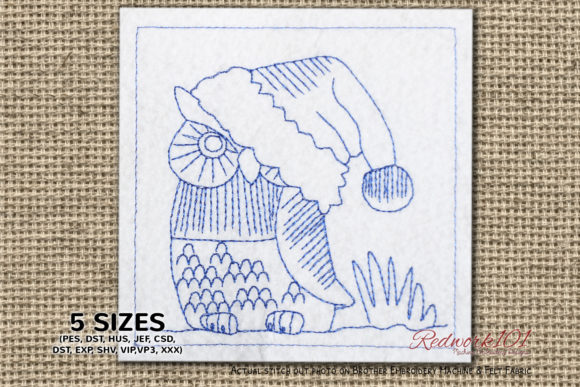
The Christmas Owl Bluework design reads like an illustration lifted from a vintage winter tale. The owl sits with a calm, slightly curious posture, and the bluework style gives it a consistent, ink-like line quality. There is no color chaos here. The blue thread against a natural or cream fabric feels restrained and elegant. It does not shout Christmas. It suggests it. That makes it a strong candidate for customers who want holiday spirit without the full explosion of seasonal color. The optional box stitch around the design adds a tidy frame, but I found the design stands perfectly well without it. If you skip the outer box, the owl floats on the fabric like a sketch, which works beautifully on tote bags and tea towels.
The stitch work in the bluework style relies on clean running stitches and subtle fill techniques. It does not try to be a dense satin patch. Instead, it breathes. The open areas let the fabric show through, which keeps the piece feeling light. For an experienced designer, that is a signal to think about fabric choice more carefully. A textured linen or a soft cotton slub will add character. A slick poly-cotton blend may feel too flat. The design wants a surface that has a little life of its own.
Where This Design Performs Best in Real Projects
After stitching the Christmas Owl Bluework on several blanks, I found a clear set of winners. The most natural fit is a tote bag made from medium-weight cotton or linen. The bluework style looks intentional and crafty on a bag, especially when paired with a wooden handle or a simple pocket. I also tested it on a sweatshirt and a baby onesie. On the sweatshirt, the design brought a low-key holiday vibe that feels right for casual winter wear. On the onesie, the scale worked well because the owl is not overly detailed or dense, so it stays soft against a baby’s skin.
For custom apparel, I would recommend this design for aprons, pillow covers, and kitchen towels. The monochromatic look plays nicely with kitchen linens, and the holiday theme is subtle enough that the item could be used through the whole winter season, not just Christmas week. Embroidered patches using this design also look sharp. If you stitch it on twill and trim close to the edge, the bluework lines give the patch an artisan feel that sells well at craft fairs.
For small shop owners and Etsy sellers, this design works as a standalone product or as part of a curated winter collection. It photographs well because the single-color stitching reads clearly even in printable mockups. Customers scrolling through listings will recognize the handcrafted look instantly. It also pairs nicely with other bluework designs if you are building a cohesive product line. The Christmas Owl Bluework gives you flexibility to offer personalized gifts without needing to manage a dozen thread changes. That saves time and reduces thread waste in a production run.
Where to Use Careful Judgment
No design is perfect for every surface, and this one has limits worth noting. The Christmas Owl Bluework relies on thin, clean lines. That means highly textured fabrics like thick fleece or bouclé can blur those lines and make the owl look messy. I also caution against very stretchy fabrics without proper stabilization. The running stitches can pull and distort if the fabric shifts. Use a cutaway stabilizer for knits and a tearaway for stable wovens. Test a scrap first.
Small hoop sizes can be tricky if the design includes the optional box stitch. The box adds width, and if you are working in a 4x4 hoop, you may need to trim your stabilizer carefully or consider reducing the design size. I found that skipping the outer box helped the design fit more comfortably in smaller hoops while keeping the owl clear and proportional. If you are embroidering caps or curved surfaces, the bluework lines can appear uneven if the hoop is not perfectly snug. I would not recommend this design for high-dome caps unless you have experience with cap frames and can test the alignment first.
Another practical note: dark fabrics are not ideal for bluework unless you use a light blue thread that contrasts boldly. The design relies on the blue-on-light aesthetic. On black or navy, the effect changes completely and you lose the delicate hand-drawn feel. Stick to cream, white, soft gray, oatmeal, or light sage backgrounds. If a customer asks for dark fabric, you could flip the design to a white or silver thread, but that moves away from the bluework concept. Be upfront about that in your listings if you sell finished products.
Visual Appeal, Product Value, and Customer Trust
From a buyer’s perspective, a handmade product featuring the Christmas Owl Bluework reads as thoughtful and original. The bluework style suggests care and intention, not mass production. That builds customer trust and supports a higher price point in a boutique setting. I have noticed that buyers in the holiday market often look for something that feels less generic. This design delivers that. It also works well for personalized gifts where you add a name or date in a complementary running stitch font. The monochromatic palette keeps the personalization from clashing.
For brand consistency, if your shop leans toward rustic, vintage, or minimalist aesthetics, this design fits naturally. It does not fight with other elements. It sits quietly and confidently. That is rare in Christmas embroidery, where many designs compete for attention with heavy fills and multiple colors. The Christmas Owl Bluework gives your product line a breath of fresh air. It also works as a digital embroidery file that you can sell to other makers. The bluework style is popular among hobbyists and creative entrepreneurs who enjoy stitching something that feels like a craft project rather than a production task.
Giftability is high. A hand-embroidered towel or tote bag with this owl feels personal without being overly sentimental. It suits a wide range of recipients, from a friend who loves owls to a family member who appreciates handmade decor. The design does not scream “Christmas” in a way that limits its use. Someone might keep it out all winter. That extends the life of your product in the customer’s home, which leads to word-of-mouth recommendations.
Practical Designer Notes from the Worktable
Before you stitch the Christmas Owl Bluework for a client or for inventory, here are the steps I take every time now.
- Test on scrap fabric first. The bluework look changes based on thread thickness and needle size. I prefer a 40-weight thread for fine lines. A 30-weight can feel too heavy. Stitch a small sample and decide.
- Check thread color contrast. The design description notes that the box stitch color can vary and is optional. I tested it with a medium blue and a pale blue. The medium blue gave more visibility. The pale blue felt more subtle. Both worked, but the contrast against your fabric matters. Hold your thread next to the fabric before you load the file.
- Review stitch density. Bluework designs use lower density than fill-heavy motifs. That is good for softness and drape. But if the density is too low in some areas, the owl may look incomplete. I checked my test stitch and found the lines connected well. No gaps or jumps.
- Confirm hoop size. The design fits a standard 5x7 hoop comfortably with the box. Without the box, it fits in a 4x4 with some margin. Measure before you commit to a layout.
- Inspect small details. The owl’s eye and beak are small. On a running stitch design, those details need to read clearly. If your machine tends to skip or shift at small shapes, slow down the stitch speed for those sections.
- Test in black and white mockups. I photographed my test stitch in grayscale to see if the design holds its shape without color cues. It did. That is a good sign for printable mockups and digital product previews.
- Compare light and dark fabric backgrounds. I already mentioned this, but it bears repeating. The design lives and dies on contrast. Light fabric, blue thread. That is the formula. Do not force it on dark ground.
- Use proper stabilizer. For a tote bag or apron, I used a medium-weight tearaway. For stretchy fabric like a sweatshirt, I used a cutaway. The running stitches need stability to stay crisp. Do not skip this step.
- Check licensing before selling. The product description does not specify commercial use terms in full, so I recommend checking the license agreement from the seller before you produce finished items or sell the digital file itself. Respect the designer’s terms.
One more observation: the Christmas Owl Bluework works well in a multi-hoop layout if you want to create a row of owls on a towel or a blanket. Just make sure you space them evenly and stabilize the whole area. The repetitive bluework pattern can become a signature element for your shop. I have seen similar approaches sell well as boutique wedding gifts and holiday hostess presents.
Final Thoughts on Using This Design
The Christmas Owl Bluework is not a flashy design. It will not compete with dense applique designs or multi-color fill patterns. That is exactly its strength. It offers a refined, hand-drawn look that resonates with customers who appreciate subtle craftsmanship. As a designer, I value it for its versatility across custom apparel, home decor, and gift items. As a reviewer, I appreciate that it stitches cleanly when given the right fabric and stabilizer. If you are an Etsy seller, a small business owner, or a hobbyist looking for a holiday design that stands out by being quiet, this embroidery design deserves a spot in your collection. Test it, trust the bluework, and let the owl do the rest.