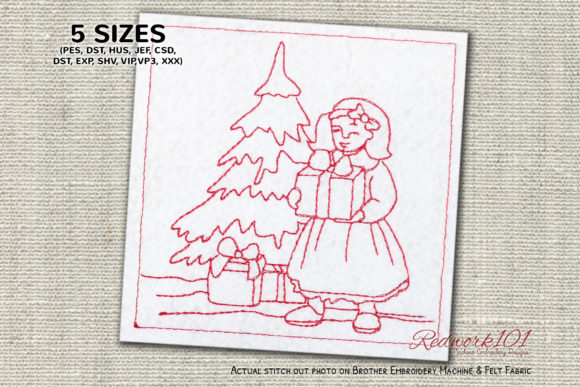
Christmas Shoes Lineart Design: A Business-Focused Review
When you run a small business, every stitch matters. I have spent over a decade digitizing and reviewing machine embroidery designs for commercial use, and I know firsthand that not every pretty design translates well into a finished product. Today I am reviewing Christmas Shoes Lineart Design from the perspective of a professional embroidery designer who works regularly with small business owners, apparel decorators, and Etsy sellers. This design has clear potential for branded merchandise, but it also comes with specific considerations that can make or break your project.
First Impression of Christmas Shoes Lineart Design
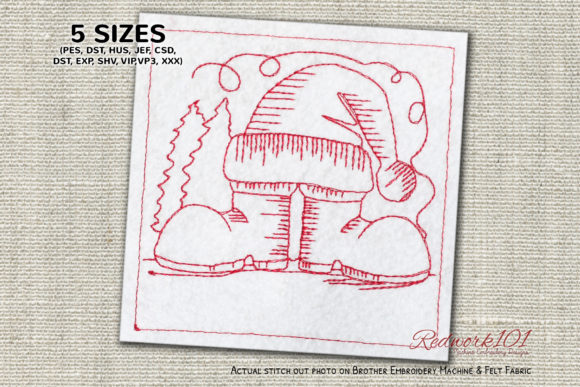
My first impression of Christmas Shoes Lineart Design is that it leans toward a handmade, rustic, and friendly visual personality. The lineart approach gives it an open, airy feel that avoids the heavy, cluttered look common in many seasonal embroidery files. This is not a dense, photo-realistic shoe—it is a clean, illustrative outline that reads well from a distance. That matters when you are placing it on a cap, a tote bag, or a small patch.
The design feels premium enough for boutique merchandise but approachable enough for a local café or bakery. It does not scream "holiday kitsch." Instead, it offers a classic, almost folk-art silhouette that can blend with a variety of brand aesthetics. If your business leans rustic, cozy, or handmade, this design will feel like a natural extension of your visual identity.
I also note the optional Box Stitch mentioned in the description. The fact that the outer box color can be skipped or adjusted gives you flexibility as a decorator. You can use the shoe alone as a standalone patch or enclose it in a border for a more structured, label-like look. That kind of adaptability is valuable when you are producing multiple product types from one embroidery file.
How Christmas Shoes Lineart Design Performs in Real Business Use
Let me walk you through how this design holds up across the most common applications I see in small business merch and branded patch work.
Embroidered Patches
Christmas Shoes Lineart Design works well as a sew-on or iron-on patch. The lineart structure keeps stitch counts manageable, which means the patch will feel soft and flexible rather than stiff and board-like. That is important if you are attaching it to aprons, tote bags, or staff uniforms where comfort and drape matter. The design's open areas also allow the background fabric to show through, which can be a deliberate aesthetic choice—especially on natural linens or twill.
Apron Embroidery
For apron embroidery, this design sits nicely as a chest or lower pocket accent. The shoe shape is vertical without being overly tall, so it fits within the typical hoop size for an apron front. I would recommend testing it at around 3 to 4 inches in height to preserve the lineart detail. The optional box stitch can help anchor the design on heavier apron fabrics like denim or canvas.
Cap Embroidery
Cap embroidery is where this design needs careful attention. The curved surface of a cap front can distort lineart if the design is too wide or the stitch density is too high. Christmas Shoes Lineart Design, with its relatively open stitch structure, is a good candidate for cap placement—provided you keep the design width under 2.5 inches. I suggest testing it on a practice cap before running a production batch.
Tote Bag Design
Tote bags are an excellent match for this design. The lineart style feels natural on canvas, cotton, or jute tote bags. It reads as a thoughtful, handmade detail rather than a mass-produced graphic. For small business merch, this is exactly the impression you want. A tote bag featuring Christmas Shoes Lineart Design can serve as a customer gift, a retail add-on, or a brand giveaway at holiday markets.
Staff Uniforms and Work Shirts
If you are branding staff uniforms for a café, bakery, or boutique during the holiday season, this design adds a festive touch without overwhelming the garment. Place it as a left chest logo or a subtle sleeve detail. Because the design is lineart, it will not trap heat or feel heavy against the body. That matters for employees who are moving, serving, and working all day.
Product Packaging Accents and Printable Mockups
Beyond embroidery, the digital embroidery file can inspire printable mockups for product packaging, hang tags, or social media graphics. The clean lineart silhouette translates well into foil stamping, screen printing, or digital printing. I often advise my clients to use their embroidery designs as design assets across multiple touchpoints—this design supports that multi-use approach nicely.
Where to Use Christmas Shoes Lineart Design Carefully
No design is perfect for every surface. Here are the areas where I advise caution with this embroidery file.
- Very small patch sizes. If you scale Christmas Shoes Lineart Design below 1.5 inches, the lineart details may start to blur or break. The thin lines need enough width to register cleanly in thread. I recommend a minimum size of 2 inches for the design to read properly as an embroidered patch.
- High stitch density fabrics. On very textured fabrics like fleece, thick terry, or heavy cable knits, lineart can get lost in the nap. The stitches may sink into the fabric and lose definition. If you must use this design on textured fabric, use a dense cutaway stabilizer and test a sample first.
- Dark uniforms or dark fabric. Lineart relies on contrast to be visible. On dark fabrics, you will need a bright thread color—white, gold, silver, or a light pastel—to make the shoe shape pop. Dark thread on dark fabric will make the design nearly invisible.
- Items that need frequent washing. Because this is a lineart design with open areas, the thread is more exposed to abrasion than a filled design would be. Use quality thread and a good stabilizer to prevent pulling or breaking over time. This is especially true for aprons, caps, and work shirts that go through commercial laundering.
- Curved surfaces beyond caps. If you are placing this design on a curved sleeve cuff, a narrow collar, or a small pocket, test the hoop size and curvature first. The design may need to be resized or adjusted to sit flat on the surface.
Brand Identity, Customer Trust, and Product Value
When I review a design for business use, I always think about how it affects brand identity and customer perception. Christmas Shoes Lineart Design communicates a few key things to your audience.
First, it says careful and intentional. A lineart design requires precision in digitizing and stitching. When customers see a clean, well-executed embroidered patch or garment detail, they associate that quality with your brand. It builds customer trust and signals that you pay attention to the details.
Second, the design feels handmade and personal. That is a major advantage for small business owners, Etsy sellers, and handmade brands. In a market flooded with generic, mass-produced merchandise, a distinctive embroidery design like this helps you stand out. It adds perceived product value and supports a premium price point.
Third, the design is versatile enough to maintain visual consistency across different product types—patches, totes, aprons, caps, and packaging. That consistency strengthens brand recall. A customer who sees the shoe on your staff apron will recognize it on your tote bag or product label. That is the kind of buyer engagement that builds loyalty over time.
For a small café, bakery, florist, pet brand, or boutique, this design offers a warm, seasonal accent that does not feel pushy or overly commercial. It invites connection rather than shouting for attention.
Practical Embroidery Designer Notes
Before you lock in this design for production, here are the steps I take with every new embroidery file I review for commercial use.
- Test it in black and white first. Stitch out the design using a single color—black thread on white fabric—to check the line quality, spacing, and registration. This gives you a clean read of the design's structure without the distraction of multiple thread colors.
- Check if it works at small patch size. Stitch the design at 2 inches, 3 inches, and 4 inches to see where the details hold up best. Many lineart designs lose definition below 2 inches. Know your minimum size before you sell or produce.
- Review thread color contrast. The description notes that the outer box color is different from the design itself and can be skipped. Use that flexibility to your advantage. Select thread colors that contrast well with your fabric and with each other. A gold or silver metallic thread on a deep red or green background can elevate the design significantly.
- Inspect spacing and underlay. Open areas in lineart need proper underlay stitching to prevent fabric from peeking through or distorting the shape. Check that the embroidery file includes edge run or center walk underlay where needed.
- Confirm hoop size. Based on the design's dimensions at your target size, make sure you have a hoop that fits comfortably with at least half an inch of clearance on all sides. Hoop burn or distortion can ruin a patch run.
- Test on real fabric. Never skip this step. Stitch the design on the exact fabric you plan to use for your finished products. Fabric texture, stretch, and weight all affect how the design performs.
- Use proper stabilizer. For lineart designs on tote bags, aprons, or caps, I recommend a cutaway stabilizer for permanent stability. Tear-away can work on stable woven fabrics, but test first. For patches, use a heavy tear-away or a water-soluble topping to keep the stitches crisp.
- Create a mockup for client approval. If you are producing this for a client or for your own brand, create a printable mockup showing the design on the actual product. This avoids surprises and sets clear expectations for placement, size, and color.
- Compare it beside other design assets. If you already have a logo, a monogram, or other embroidery files in your brand library, stitch this design next to them to ensure visual harmony. A mismatch in style or scale can make your merchandise look inconsistent.
- Confirm commercial licensing before business use. The description for Christmas Shoes Lineart Design does not explicitly state the license terms. Check with the seller or distributor to confirm that the embroidery file is cleared for commercial embroidery—meaning you can sell the finished products you make with it. Some digital embroidery file licenses restrict resale or production volume. Do not assume; confirm.
Final Thoughts for Small Business Merch Creators
Christmas Shoes Lineart Design is a solid choice for small business merchandise, branded patches, and custom apparel—when used with the right preparation. Its friendly, handmade aesthetic suits a wide range of brands, from cafés and bakeries to boutiques and creative studios. The optional box stitch adds flexibility, and the lineart structure keeps stitch counts reasonable for production efficiency.
Focus on size testing, thread contrast, fabric choice, and stabilizer selection. Those four factors will determine whether your finished product looks professional or falls flat. If you take the time to test and adjust, this design can become a valuable part of your seasonal brand identity.
Whether you are stitching it on staff aprons, selling it as an embroidered patch, or using it as a tote bag design, Christmas Shoes Lineart Design offers the kind of quiet, thoughtful detail that customers notice and remember. That is exactly what good small business merch should do.